I signed up for the Malaysia Marathon on 30 August 2026 partly because the slots for SCKLM had already been taken up. The idea of a marathon starting from Pavilion Kuala Lumpur and finishing near KLCC also sounded interesting and something different.
Only later did I realise one major drawback — a large part of the course would be on highways!
Nevertheless, my objective was simple: complete marathon No. 93.
So, here I go again.
Race Pack Collection
Race pack collection was held at Premiera Hotel Kuala Lumpur, somewhere near SOGO.
Entry into the race pack collection area required facial-recognition authentication. Once inside, however, the rest of the collection process was quite smooth.
Most of the sponsor booths were selling sports apparel and accessories. Since I did not really need anything, I spent only about ten minutes browsing before heading out for lunch with my KL running friends.
Sometimes the best part of race pack collection is not the shopping — it is meeting old running friends again!
A Midnight Start
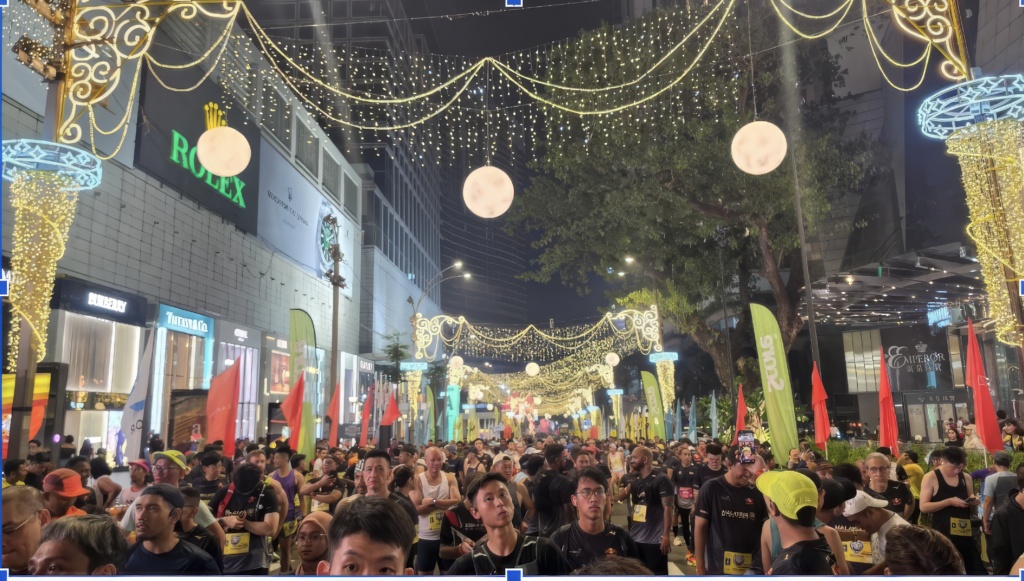
The Full Marathon was scheduled to start at 12:30 a.m.
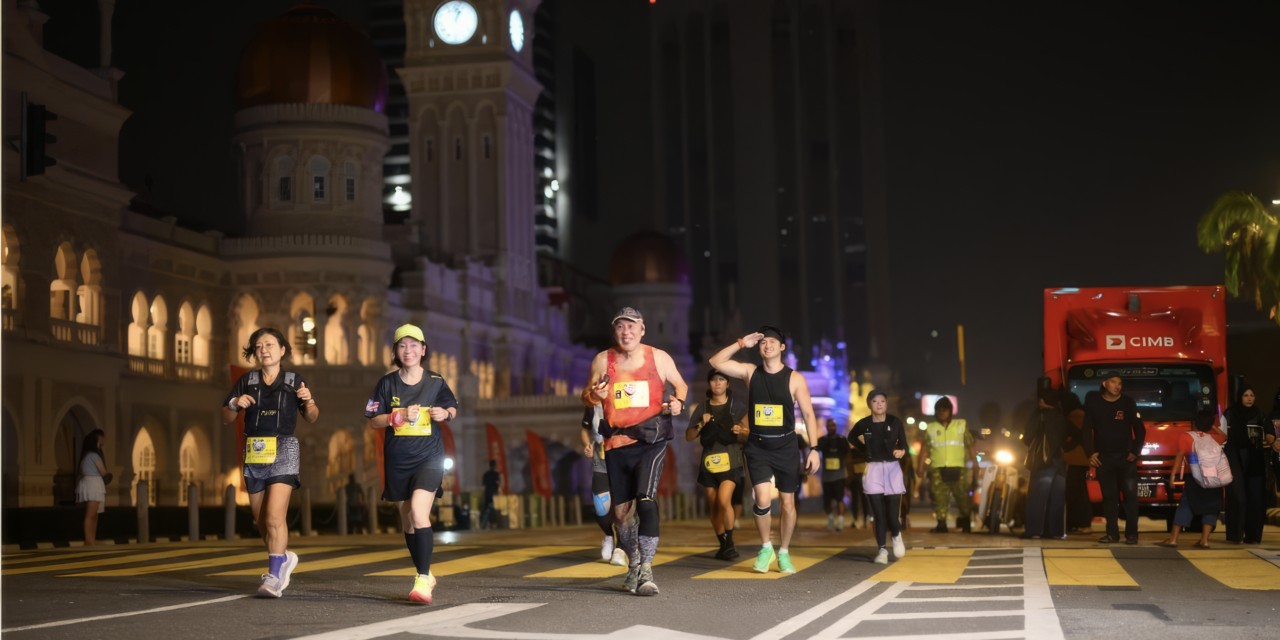
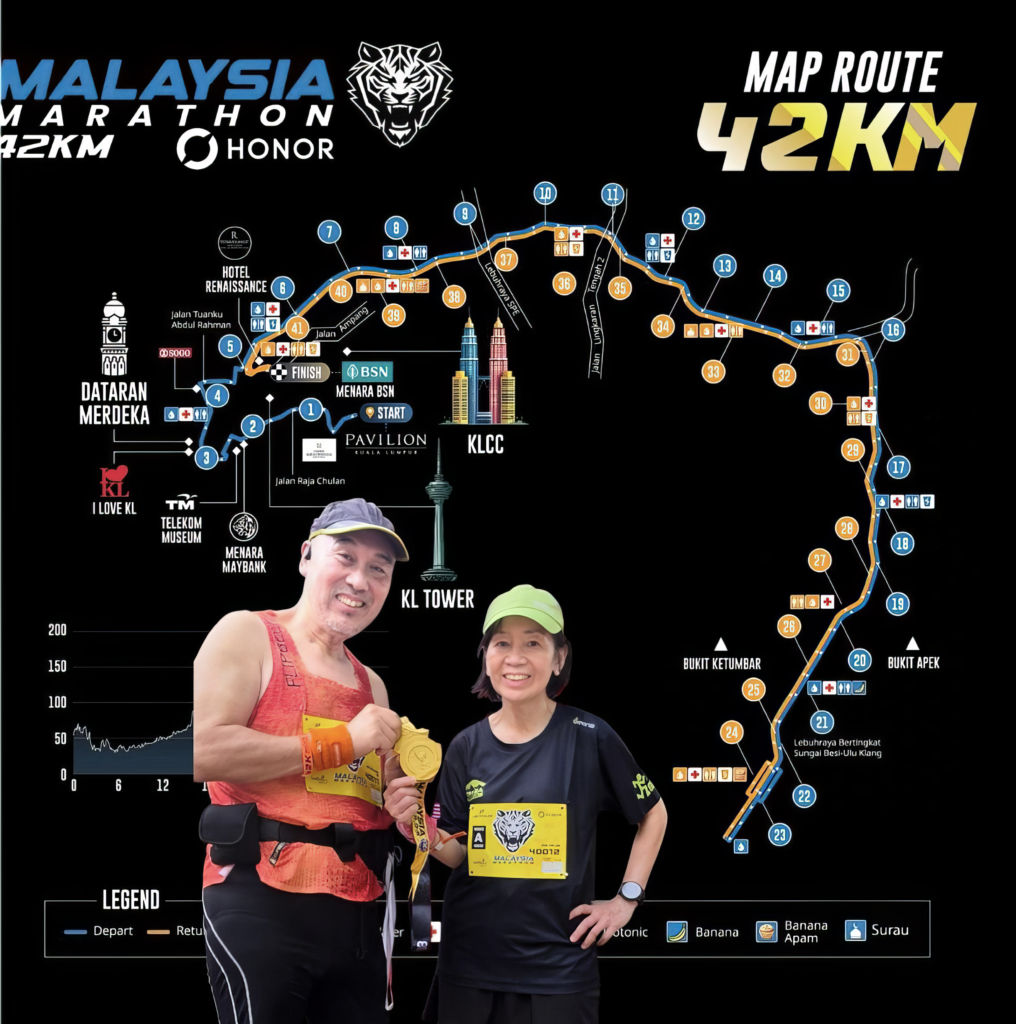
Doris and I walked about one kilometre from our hotel, Imperial Lexis Kuala Lumpur, to the starting area and arrived at around 11:45 p.m.
The atmosphere was already lively. It was also the eve of Malaysia’s National Day, which added something special to the occasion.
According to the event figures, there were approximately 12,000 Full Marathon runners, 13,500 Half Marathon runners, 11,000 runners in the 10 km and about 5,000 in the 5 km fun run. It was certainly a sizeable field spread across the different categories.
There had been concerns over haze affecting parts of Malaysia, so I was relieved that the air quality was acceptable enough for the event to proceed as planned. The temperature at midnight was also quite comfortable for running.
After the national anthem, the race was flagged off on time.
Highway, Highway… and More Highway
As expected, much of the course took us onto the highways, including stretches through toll areas and several ups and downs around the flyovers and bridges.
Long highway sections can become mentally monotonous, so I went back to the strategy I normally use in long races:
One kilometre at a time.
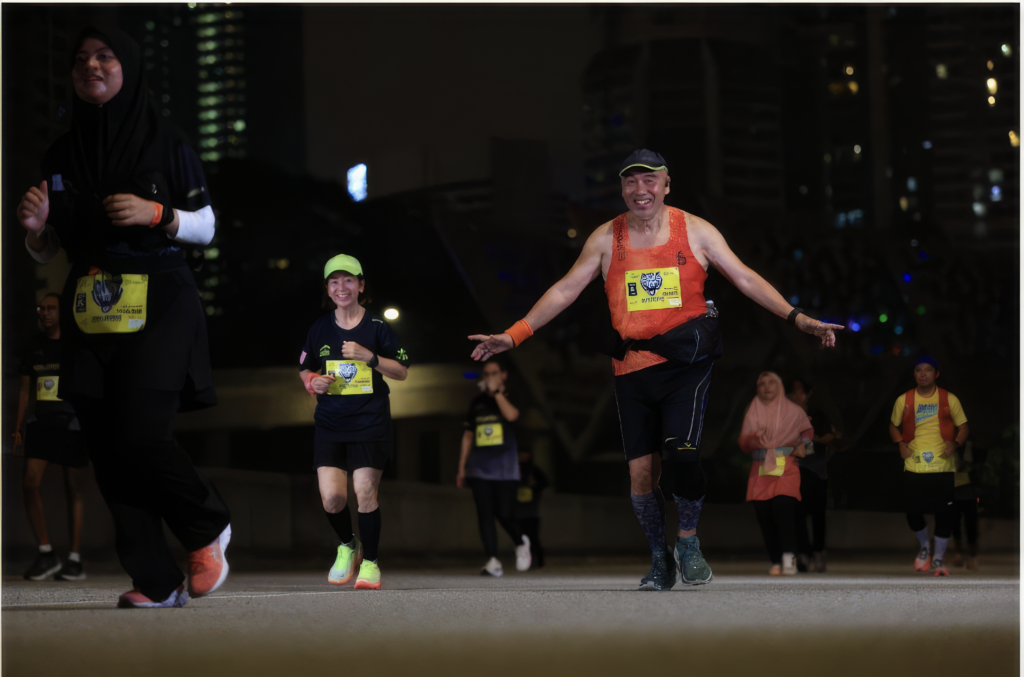
Instead of thinking about the whole 42.195 km, I concentrated only on completing each kilometre comfortably.
Interestingly, the course distance markers were rather inconsistent and did not appear at every kilometre. Fortunately, I relied mainly on my Garmin watch to keep track of my distance and pace.
Perhaps that night I trusted my Garmin more than the distance signboards!
To make the long highway journey a little more interesting, I also carried my Insta360 GO Ultra to capture some photographs and video clips along the way.
There was some congestion during the first few hundred metres, but once the runners spread out, there was plenty of space to move around.
Hydration stations were roughly every 2.5 km, serving water and, at selected stations, isotonic drinks.
As I was towards the back of the field, one station had unfortunately run out of water.
Fortunately, I always carry some water with me during a marathon for exactly this sort of situation, so there was no need to panic.
Because we were running after midnight, crowd support along much of the route was understandably limited. After the first kilometre or so, things became relatively quiet.
One memorable exception was around the Chinatown area, where a group of European tourists appeared to be enjoying their drinks — and still had enough energy to cheer us on!
At that hour of the morning, any cheering was welcome.
The Real Objective: Finish No. 93
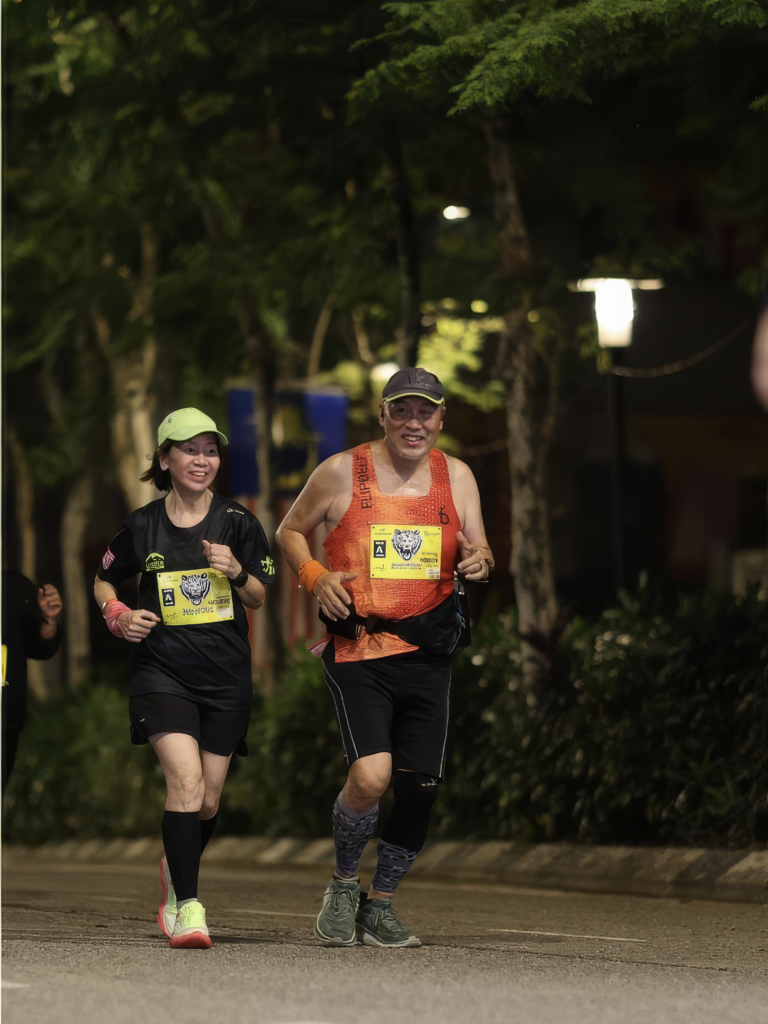
A leg injury from a few months earlier meant that this was never going to be a race for speed.
My strategy was simply to move at a comfortable pace and complete the marathon within the 7-hour 30-minute cut-off time.
Mentally, I divided the marathon into four blocks of 10 km, leaving the final 2 km-plus open. How I tackled those final kilometres would depend on how much time I had left.
Everything went reasonably well until around the 30 km mark.
That was when my leg muscles began sending me some warning signs.
But with approximately 12 km remaining, I knew that finishing was still very possible. There was no reason to take unnecessary risks, so I switched mainly to brisk walking while using my Garmin to monitor my pace and the time remaining.
Again:
One kilometre at a time.
Each kilometre completed meant one kilometre less to worry about.
When Daylight Changed Everything
One of the nicest parts of the route came when we passed near the Saloma Link Bridge area.
By then it was approaching 7 a.m. The sky had begun to brighten — and so had my mood.
After spending so many hours moving through the darkness, seeing daylight somehow made everything feel different.
And then finally came the sign every marathon runner loves to see:
1 KM TO GO.
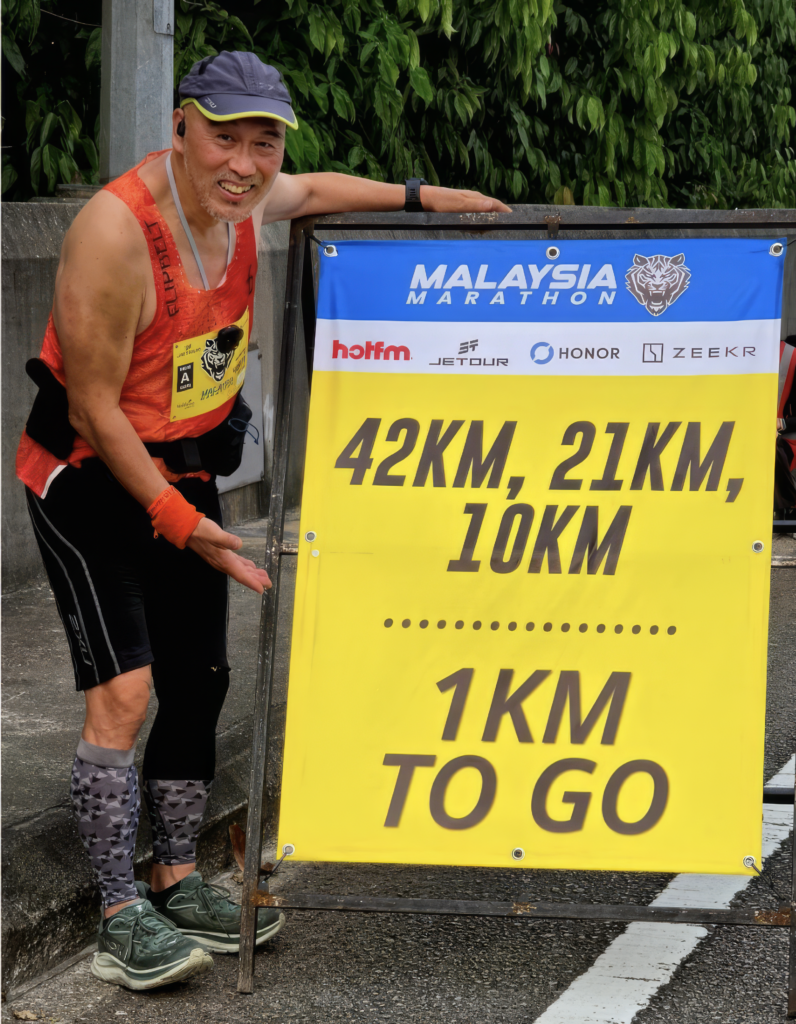
By that point, I had around ten minutes remaining before the cut-off and was very confident that I would reach the finish without any problem.
Suddenly, that last kilometre became fun.
The tired legs were still there, of course, but mentally the marathon was already mine.
Crossing the Line Together
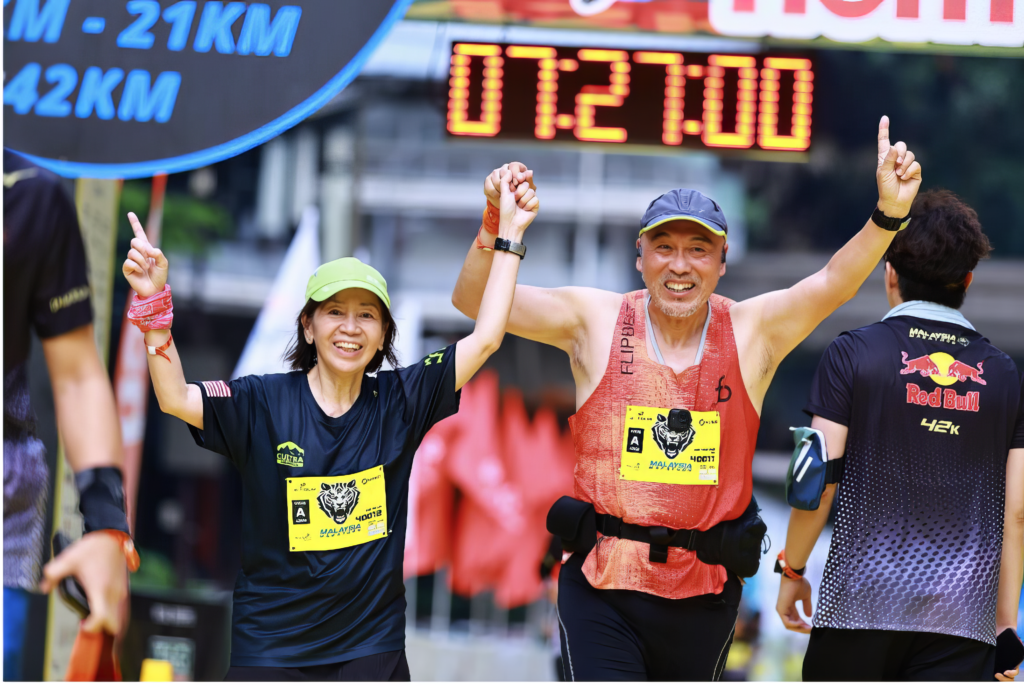
For this race, Doris, my running partner, stayed with me throughout the entire journey.
That made the finishing moment especially meaningful.
We crossed the finishing line together, hands raised, and the official photographer captured a lovely photograph of the two of us.
After more than seven hours on the road, that photograph probably sums up the Malaysia Marathon journey better than many words could.
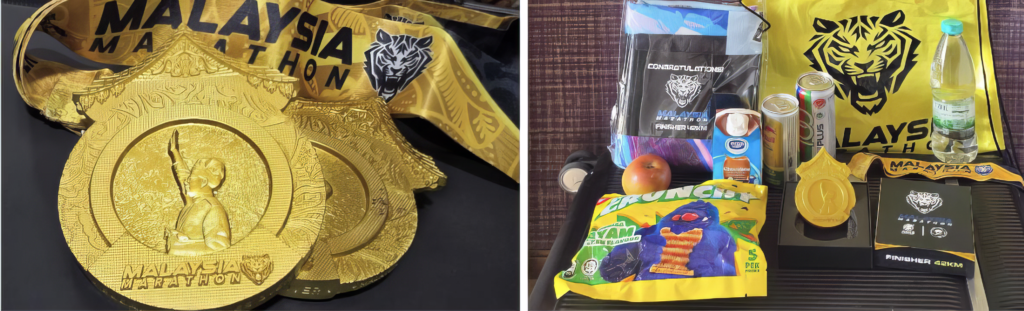
For this race, finishers received a towel and a rather impressive medal, although there was no separate finisher T-shirt.
I would normally prefer to receive a finisher tee after completing a marathon, but the event running shirt — with its 42 km marking — made the compromise a little easier to accept.
And so, another 42.195 km was completed.
Marathon No. 93 — done.
Not the fastest. Not the easiest. And certainly not the most scenic course I have run.
But sometimes a marathon is simply about understanding your body, managing the problems as they appear, and continuing forward.
One kilometre at a time.
Watch David as he navigates all 42km of the 1Malaysia Marathon: