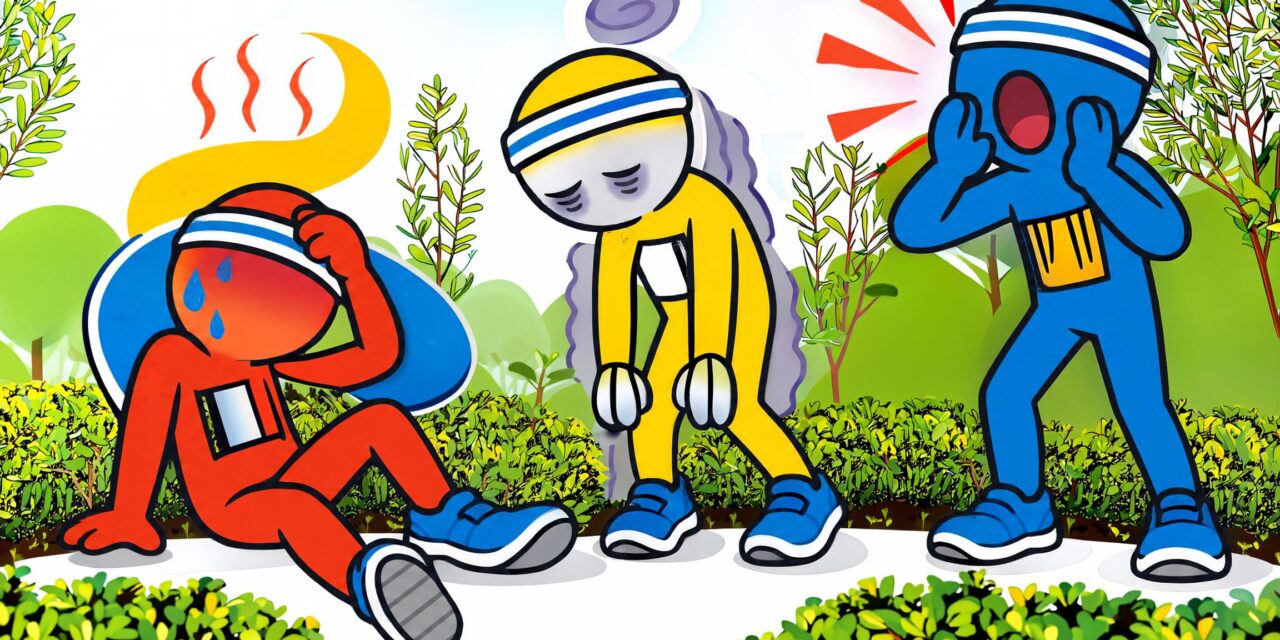
With just four weeks left until the biggest race of the year and the haze finally clearing, the marathon is officially a go! But the real question is: are you ready?
We don’t just mean whether you’ve logged enough training miles—though the haze certainly threw a wrench into everyone’s schedules. Now is the time to look ahead and prepare for what happens to your body when you pound 42.195 km of hard concrete.
Running a full or half marathon isn’t like stepping out for a light jog around your neighborhood. Over long distances, unexpected medical complications can pop up even for well-trained runners. Here is what to watch out for and how to stay safe on race day.
1. Dehydration
When you run, your working muscles generate metabolic heat. In cool, dry weather, your body pumps blood to your skin so sweat can evaporate, cooling your blood and maintaining a safe core body temperature.
In high humidity, however, sweat cannot evaporate effectively because the air is already saturated with moisture. Sweat simply drips off your body without providing a cooling effect. Your body keeps sweating heavily to compensate, leading to rapid fluid loss without effective thermal regulation.
Fluid Loss Impact & Symptoms
| Dehydration Level (% Body Weight Lost) | Impact & Symptoms |
| 1% to 2% (~0.7 – 1.4 kg for a 70kg runner) | Elevated heart rate, onset of thirst, early thermal discomfort, and minor performance dips. |
| 3% to 4% | Significant drop in muscle endurance, impaired gastric emptying, headaches, dark urine, and heavy limbs. |
| 5% to 6% | Severe muscle cramping, chills, loss of concentration, nausea, and a sharp decrease in physical capacity. |
| >7% | High risk of heat collapse, Exertional Heat Stroke (EHS), and organ failure requiring immediate emergency medical intervention. |
2. Heat Exhaustion & Heat Stroke
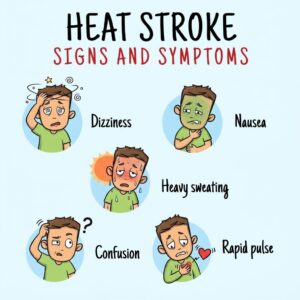 Heat Exhaustion: Symptoms include profuse sweating, pale or clammy skin, dizziness, headaches, nausea, a rapid pulse, and muscle cramps. These are common early warning signs during long races.
- Heat Stroke: If heat exhaustion is ignored and you continue to push through, it can progress to exertional heat stroke. Symptoms include central nervous system dysfunction (confusion, disorientation, irrational behavior, slurred speech, or loss of consciousness), hot/flushed skin, vomiting, and rapid breathing.
Heat stroke is a severe, life-threatening emergency where core body temperature surges above 40°C (104°F) because the body’s cooling mechanisms fail entirely.
During the 2024 Standard Chartered Singapore Marathon, 20 participants required medical attention for heat-related illnesses, and one runner tragically passed away.
3. Muscle Cramps
A very common (and less severe) consequence of fluid and electrolyte depletion is muscle cramping. While painful, it is your body’s early signal to slow down, stretch, and restore your hydration levels. We will look at this in more detail in our next story.
4. Exercise-Associated Hyponatremia (Over-Hydration)
On the flip side of dehydration lies hyponatremia—a condition caused by drinking too much plain water or low-sodium fluids beyond your thirst capacity.
When your blood sodium levels drop below 135 mmol/L, water moves into your cells, causing brain tissue to swell. Symptoms range from confusion and lethargy to seizures and severe respiratory distress. While rare, severe hyponatremia can be fatal.
While it has not happened in Singapore, runners in other countries have died as a result of hyponatremia.
Finding the Right Balance
- Drink moderately at aid stations—you don’t need to gulp down multiple cups at every stop unless your body demands it.
- Alternate plain water with isotonic sports drinks.
- Use energy gels or salt tablets on longer runs if you are a heavy sweater.
- Practice your fueling strategy during your long weekend training runs—never try a new hydration plan on race day!
5. Rhabdomyolysis
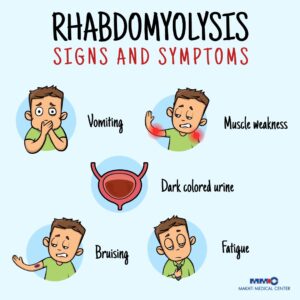
Image credit: Makati Medical Centre
Rhabdomyolysis occurs when overworked skeletal muscle tissue breaks down rapidly, releasing toxic protein components (like myoglobin) directly into your bloodstream and kidneys. This can lead to acute kidney failure and life-threatening complications.
- Key Symptoms: Extreme muscle soreness far beyond normal exertion fatigue, severe limb swelling, and dark brown or “tea-colored” urine.
- Risk Factor: It most commonly affects runners who push far beyond their physical preparation without taking necessary rest breaks.
In the recent NYC Marathon, a 24 years old female tragically passed away of rhabdomyolysis.
6. Cardiac Arrest / Heart Failure
Sudden cardiac events during marathons are rare, but they can happen when underlying or undetected heart conditions are pushed to extremes during high-intensity endurance efforts.
Running Shots have looked at this previously in June 2026. Read it up if you haven’t done so.
Listen to Your Body & Enjoy the Run!
Did all of this scare you off running? Don’t worry! All of these conditions are preventable with smart pacing, proper hydration, common sense, and structured training leading up to race day.
If you’re looking for guidance, join running clubs like the X-Run Club or join running groups like Safra Runners where experienced veteran runners can help you navigate your race strategy safely.
Train smart, listen to your body, and we’ll see you at the finish line!