Recently there was a news report about a crocodile at Pandan Reservoir. For runners in the West, especially those living around the Pandan Reservoir area, the news must have sent a cold shiver down the spine, all the way into their $300 carbon-plated running shoes!
Thank goodness, that news turned out to be fake news, created by someone who bo liao and craving their 15 seconds of social media fame. So, for now, it is business as usual at Pandan Reservoir, with runners continuing to do what Singapore runners do best: run loops round and round until Mommy calls you to go home for dinner.
But what if you actually stumble across a real crocodile during one of your runs? While your chances of coming across one is as good as you striking the 4-D first prize, crocodile sightings along our coastal shores are not unheard of. Over the years, there have been sightings at Pasir Ris beach, East Coast Beach, Sembawang Beach and more recently Sentosa.among others.
Singapore Crocodile 101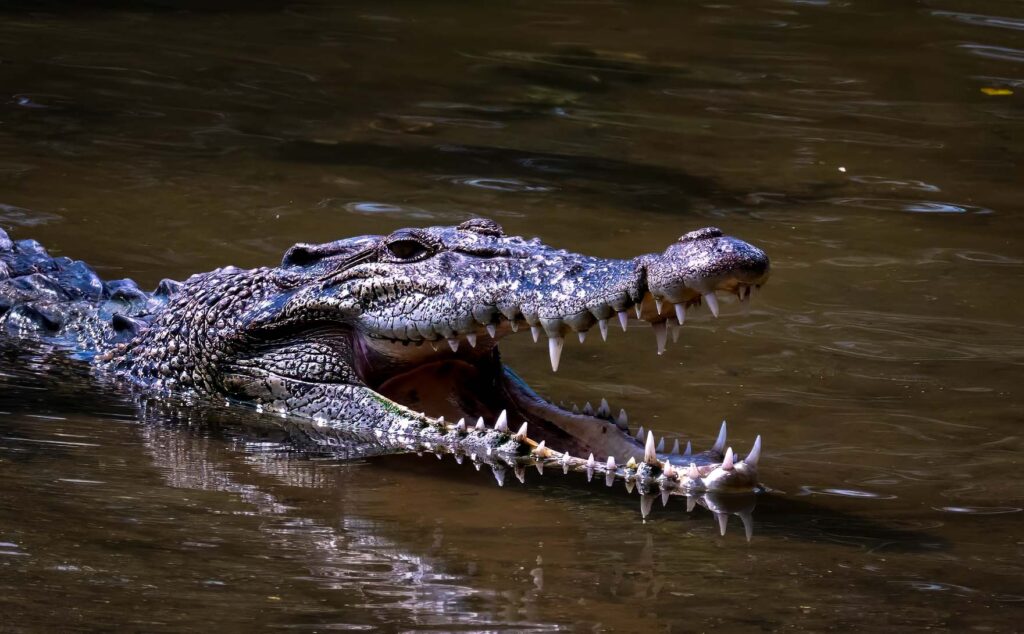
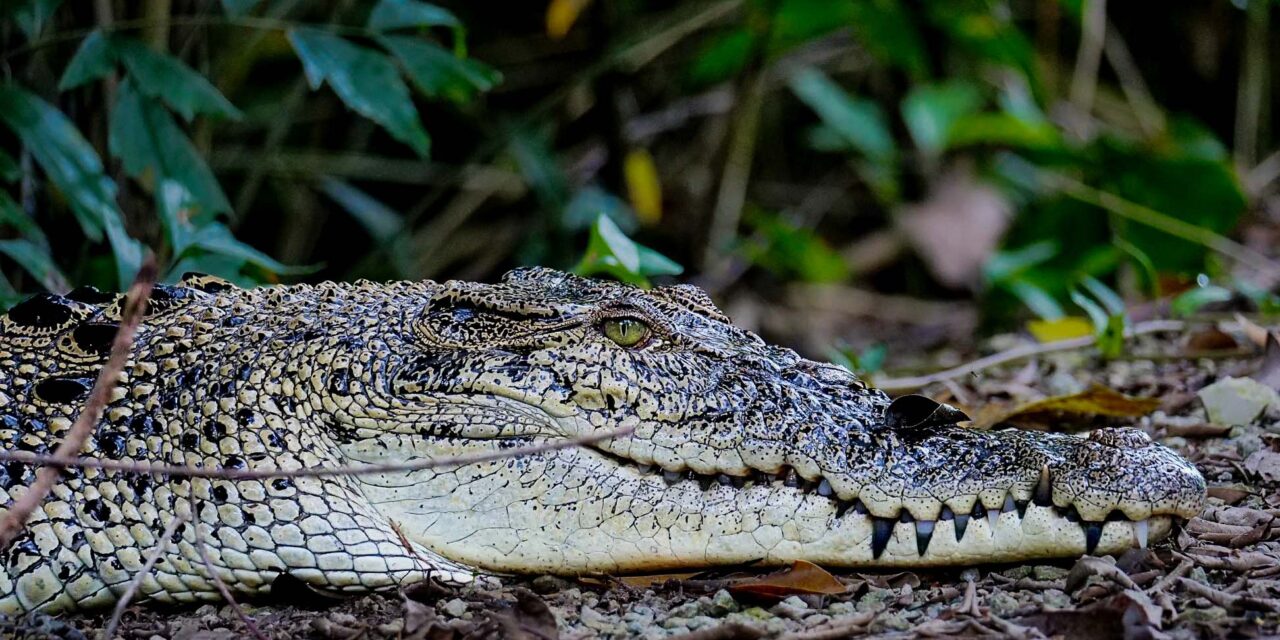
Some facts about the crocodile that can be found in Singapore. These are Estaurine or Saltwater Crocodiles that are found across South East Asia, India and Australia. In Singapore, saltwater crocodiles can be seen frequently at the Sungei Buloh Wetland Reserve.
The saltwater crocodile is the largest living reptile on earth. Large males can reach around 6 metres in length and weigh well over 1,000 kg. They are opportunistic predators and can eat anything from fish and birds to large mammals — including, potentially, humans.
With its long snout and stubby legs, a crocodile might look like a slow, clumsy, overgrown lizard. But make no mistake: underneath that lazy exterior is pure muscle. On land, a croc can sprint in short bursts at speeds of 10 to 18 km/h. Sure, they can’t sustain that speed for long, but 18 km/h translates to a 3:20/km pace! Unless you are Usain Bolt or Eliud Kipchoge, it will catch you in a sprint.
So, if you are out for a run and suddenly find one sitting in the middle of the path, what should you do?
❌ WHAT NOT TO DO
- Do NOT run up close for a selfie. Tik Tok or Instagram video. A selfie with a wild croc is not worth your arm.
- Do NOT charge at it like a brave warrior in the hope of scaring it away. You are wearing running shorts, not Kevlar armor. Don’t act hero.
- Do NOT stand your ground, jump around, shout or shake your fist at it. Save the energy for getting away from it.
- Do NOT look for a stick, stone or other object to hit it. All you will succeed in doing is converting a calm, sleepy croc into an extremely angry, fast-moving croc.
✅ WHAT TO DO
- Stay calm. Do not panic or make sudden loud movements that could startle the croc.
- Back away slowly. Move backwards, step by step, while keeping the croc in sight.
- Do NOT turn your back. Keep watching it as you retreat to a safe area. Your running can wait. Your safety cannot.
- Stay on designated paths. If you are on a nature trail or park connector, do not wander into the brush, mudflats or water to get around the croc.
- Report the sighting immediately to NParks’ 24-hour Animal Response Centre at 1800-476-1600.
And finally…
If you followed all the steps above and somehow still find yourself being chased down the path by a hungry crocodile, just remember one important survival law:
You don’t necessarily need to outrun the crocodile. You just need to outrun your buddy running next to you.