
Every time we read a headline about a runner collapsing mid-race, a collective shudder ripples through the running community.
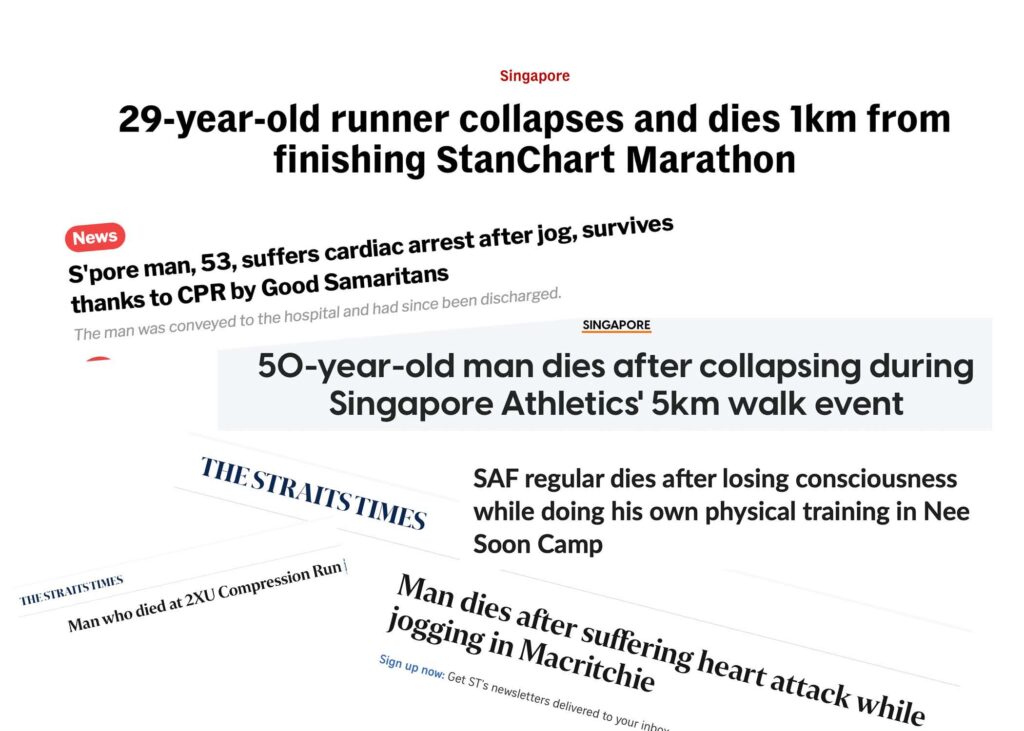
As runners, we like to think we’re doing everything right.
We clock our kilometres faithfully every week, watch our pace and food intake, and proudly wear our finisher tees. We tell ourselves that running is making us healthier, stronger and hopefully helping us outrun the grim reaper for a few more years. And so when we read news like that or worst hear of one of our running acquaintances passing on while running, we go:
“How can that happen?”
“He looked so fit.”
“He just completed a marathon.”
Unfortunately, sudden cardiac deaths during races, while rare, do happen. These cases remind us of an uncomfortable truth:
Running does not cause sudden cardiac death. But running can expose underlying heart problems that were previously hidden.
The Biggest Myth in Running
Many runners believe:
“I run regularly, therefore my heart must be healthy.”
I used to think that too.
Running is excellent for cardiovascular health. Numerous studies have shown that regular exercise reduces the risk of heart disease. But running is not a magical shield.
- You can be fast and still have blocked arteries.
- You can have a six-pack and still have cholesterol problems.
- You can run a marathon and still carry genetic risks.
Fitness and heart health overlap—but they are not the same thing.
And I can attest to this. As an experienced runner who has logged countless kilometers over the years, I learned the hard way that fitness is entirely separate from cardiovascular health.
Last year, despite being a regular runner for many years, maintaining a reasonably healthy lifestyle and completing countless races, I was diagnosed with five blocked coronary arteries. Not one. Not two. Five.
 The diagnosis came as a complete shock.
I wasn’t overweight. I wasn’t sedentary. I wasn’t spending my weekends on the sofa binge-watching Netflix with packets of chips. I was running regularly, covering decent mileage and feeling generally fit.
Yet there I was, lying in a hospital bed undergoing angioplasty, balloon procedures and stent insertions.
That experience fundamentally changed the way I look at running, fitness and heart health.
Because being fit does not automatically mean being heart-healthy.
And sometimes, the runners who look strongest can be carrying risks they never knew existed.
What Actually Happens?
When people hear the term “heart attack”, they often imagine blocked arteries. But sudden collapse during exercise can occur from several different causes:
1. Coronary Artery Disease
For older runners (typically aged 40 and above), the primary culprit is Coronary Artery Disease. Over decades, cholesterol plaques build up inside the arteries. Endurance running causes the heart to remodel and grow stronger, which can mask these blockages. Your body becomes highly efficient at working around a restriction until a high-stress scenario—like sprinting for a personal best in 90% humidity—causes a plaque to rupture, completely sealing off blood flow.
2. Congenital Heart Abnormalities
In younger runners under 35, the most common structural cause is Hypertrophic Cardiomyopathy (HCM), an inherited genetic condition where the heart muscle walls become abnormally thick. This thickening can disrupt the heart’s electrical signals during maximum exertion, triggering a lethal rhythm.
3. Heat Stress and Dehydration
Singapore’s weather is not runner-friendly. High ambient heat and humidity prevent efficient sweat evaporation, forcing the heart to pump exponentially faster just to move heat from the body to the skin. This severe dehydration, coupled with electrolyte imbalances (like sudden drops in potassium or sodium), drastically lowers the threshold for an electrical short-circuit.
Warning Signs Runners Should Never Ignore
Many runners are incredibly stubborn. We happily run through blisters, sore legs and questionable life decisions. But some symptoms should never be brushed aside:

- Chest discomfort or tightness
- Unusual shortness of breath
- Dizziness during exercise
- Fainting or near-fainting episodes
- Unexplained fatigue
- Heart palpitations
- Pain radiating to the arm, neck or jaw
If these occur, stop running and seek medical evaluation. No personal best is worth gambling your life over.
How to Reduce Your Risk
The good news is that sudden cardiac death during running remains extremely rare.
There are practical steps every runner can take:
-
 Get Regular Health Screenings
Go for regular health screening. A simple screening may reveal problems long before symptoms appear although it often misses silent blockages. A standard resting electrocardiogram (ECG) is a great baseline but if you are a senior runner or have any of the 3 highs, or have a family history of heart disease, speak to a cardiologist about an exercise stress test or a CT Coronary Angiogram. My five-artery blockage wasn’t visible from the outside, and a deep-dive screening is what ultimately kept me alive to run another day.
-
Don’t Ignore Recovery

Over training, illness and poor sleep increase stress on the body. Have at least one rest day a week. Do cross training instead of LSD every day. Sometimes the smartest training session is the one you skip.
-
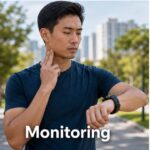 Differentiate “Good Pain” from “Bad Warning Signs”
As runners, we pride ourselves on pushing through discomfort. You must learn to separate metabolic fatigue (burning lungs and heavy legs) from cardiac warning signs. Immediately stop running if you experience:
-
- Any tightness, pressure, or a squeezing sensation in your chest, jaw, neck, or back.
- Sudden, unexplained breathlessness that doesn’t align with your current pace.
- Dizziness, lightheartedness, or feeling like you might black out.
-
 Practice Strict Restraint in Hot Climates and hydrate adequately
Drop the “all-out, all the time” mentality during local races and training runs. If the temperature is high, adjust your target pacing downward. Ensure you are aggressively hydrating with electrolyte-formulated drinks—not just plain water—before, during, and after long endurance blocks to prevent triggering arrhythmias.
A Different Kind of Personal Best
My diagnosis last year changed my relationship with running. I still appreciate the joy of being out on the roads and trails. But now I also appreciate something I once took for granted—the privilege of having a functioning heart.
The experience taught me that health is not simply about how fast we run or how many kilometres we log. As runners, we spend countless hours training our legs.Maybe it’s time we paid a little more attention to the engine powering them.Because the most important finish line is not the one at the end of the race.
It’s making it safely home afterwards.