
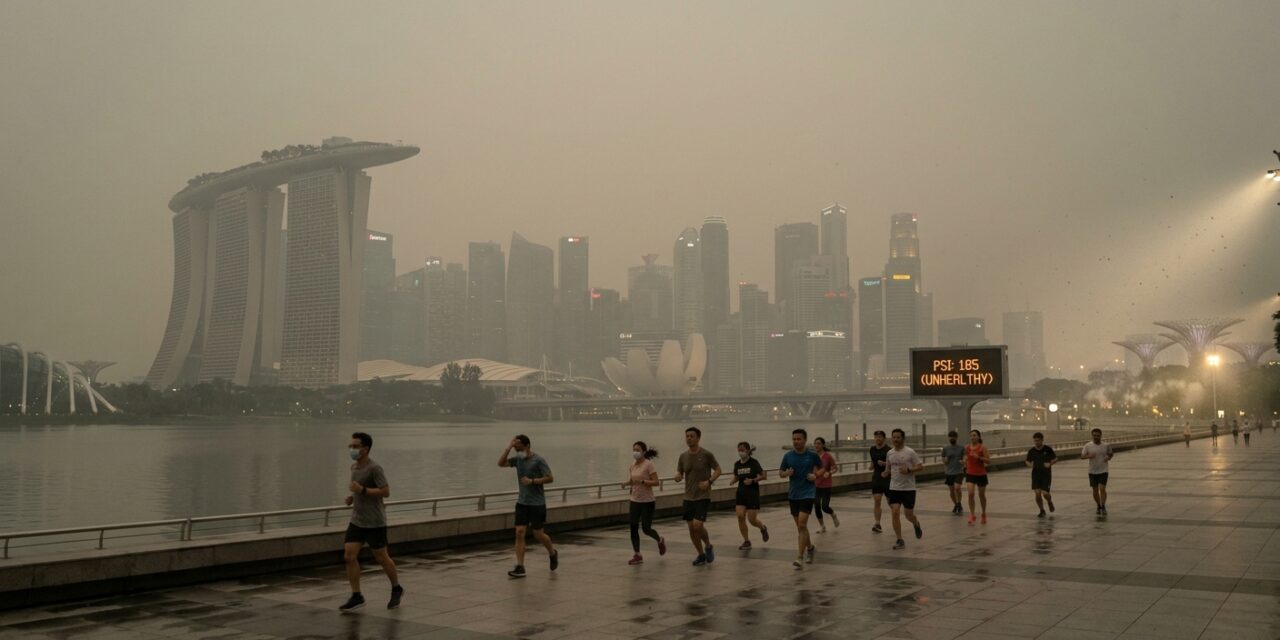
The Haze Is Back!
The haze is back! On 4 September 2026, Singapore’s National Environment Agency (NEA) recorded a PSI reading above 100 in Central Singapore. And if you have been running in Singapore for long enough, you probably remember what happened the last time the haze crossed into our little red dot.
In 2015, five running events were either cancelled or downgraded to walks because of the haze. Yes, even races with expensive registration fees, fancy event tees and finisher medals had to take a back seat when the Haze comes a-calling. .
So, why is running in the haze such a bad idea? With the haze blocking out the sun and making things a little less hot, shouldn’t that actually make running more pleasant?
Erm… apparently not.
When you run, you breathe harder and faster. Unfortunately, that also means you can inhale more fine particles, including PM2.5, which can travel deep into your lungs. Some of these tiny particles can even enter your bloodstream.
What Happens When You Run in Hazy Air?
Your lungs take a hit. Dirty air can irritate and inflame your airways, causing coughing, a scratchy throat and breathlessness. That makes it harder for your body to get the oxygen it needs while you run.
Your heart has to work harder. Fine pollution particles can enter the bloodstream and trigger inflammation. This can put additional stress on the cardiovascular system.
Recovery can take a beating. Exposure to air pollution can increase stress and inflammation in the body, leaving you feeling more tired and making recovery from your workout less comfortable.
So, if your usual 10km leaves you feeling like you have been hit by a car, a hazy 10km may leave you wondering whether you have been hit by a lorry.
But What If the Haze Doesn’t Go Away?
We hear you. Runners are a stubborn bunch. Tell us not to run and suddenly we start checking the PSI every 10 minutes, looking for loopholes.
And what happens to all that pent-up running energy? Fear not! Here at Running Shots, we have developed the ultimate battle order for surviving the haze…
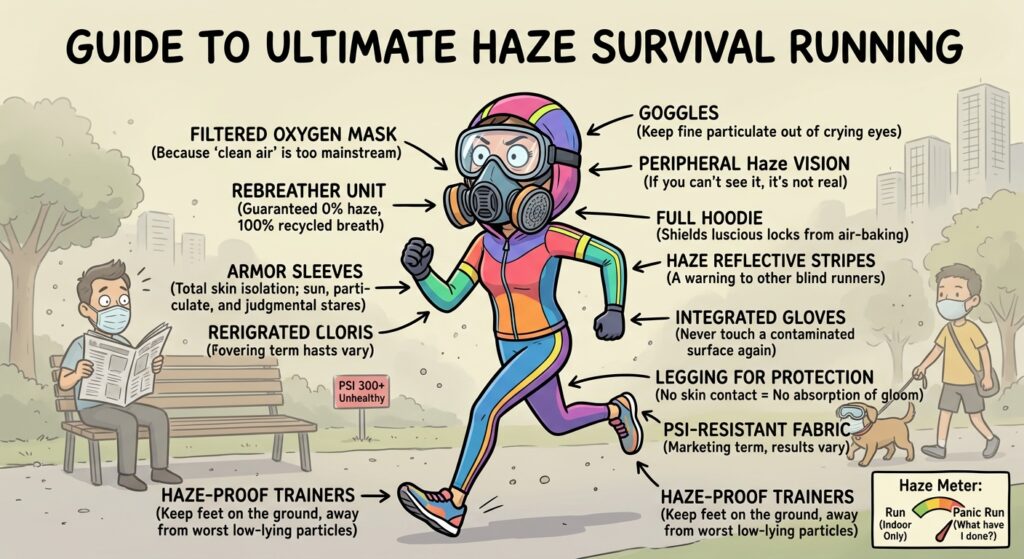
Okay, okay. We are kidding.
So, What Should Runners Do?
-
Check the Air Quality First
- Before heading out, check the NEA’s latest air-quality reading and follow its health advice.
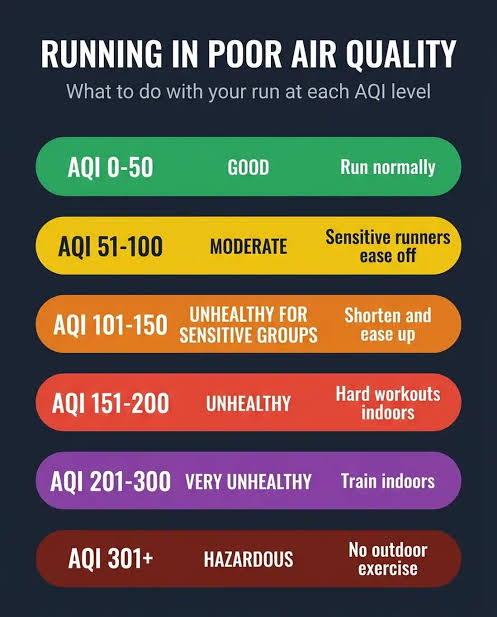
- Don’t rely on how the sky looks. Haze can be unhealthy even when it doesn’t look particularly dramatic.
-
Change Where and When You Run
- Go indoors. A treadmill or indoor running track in a properly filtered environment is a much better option when outdoor air quality is poor.
- Stay away from busy roads. Vehicle exhaust adds another layer of pollution. If you do run outdoors in marginal conditions, avoid major roads and traffic-heavy routes.
-
Turn Down the Effort
- Skip the hard stuff. HIIT, intervals, tempo runs and other high-intensity sessions make you breathe faster and inhale more air. Save the heavy workout for a clearer-air day.
- If outdoor conditions are marginal and you choose to run, keep the effort easy. Think comfortable jog rather than ‘today I am breaking my 10K PB’.
-
After Your Run
- Shower and change. Washing your skin and hair after being outdoors can help remove particles that have settled on you.
- Drink normally and stay hydrated. Fluids support normal mucus function and help keep your throat and airways comfortable. You do not need to turn yourself into a walking water tank.
The Bottom Line
The haze will eventually clear. Your lungs, hopefully, will still be happy with you when it does.