
Running together as a couple sounds like the perfect romantic activity. Fresh air, endorphins, quality time, maybe even a nice coffee after. What could possibly go wrong?
Plenty, as it turns out.
Many runners who convince their spouse or partner to join them soon discover that couple running has its own unique… challenges. Nothing serious of course, but enough to make even the most loving relationship test its pacing strategy.
1. The Pace Problem
This is the classic.
One partner sets off thinking it’s a relaxed run. The other partner quickly realizes they are doing what feels suspiciously like a threshold workout.
Often the faster runner doesn’t even realize it.
“Are you okay?” he asks casually while cruising along.
“Yes…” she replies between breaths that sound suspiciously like a steam engine climbing a hill.
Eventually one of three things happens:
-
The faster runner slows down (rare but admirable).
-
The slower runner silently suffers (very common).
-
Or the slower runner stops suddenly and says, “You go ahead.”
Which in running language roughly translates to: You’re in trouble later.
The golden rule most couples eventually learn: the slower runner always sets the pace.
2. Different Run Objectives
Another common issue is that both runners start the same run with completely different goals.
One partner might be thinking:
“This will be a nice easy conversational run.”
The other partner might be thinking:
“Perfect day for a 20 km progression run.”
Five minutes in, one person is trying to chat about dinner plans while the other is focusing on maintaining a very specific pace for the distance.
The result is a slightly awkward mix of half-finished conversations and increasingly laboured breathing.
A simple pre-run conversation usually solves this:
“Are we running together… or running together?”
Those two things are not the same.
3. The Coaching Trap
Many well-meaning runners fall into what is known as The Coaching Trap.
Without realizing it, they begin offering helpful tips during the run.
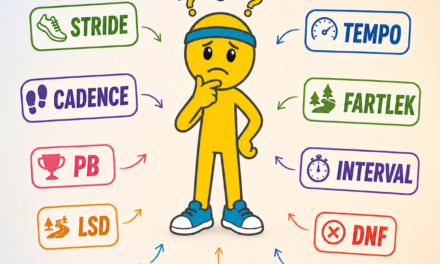
“You should shorten your stride.”
“Try landing midfoot.”
“Your cadence should be higher.”
Technically, these may all be valid running advice.
However, during a run with your spouse, they may be interpreted slightly differently.
Usually as:
“Why are you running wrong?”
Most experienced running couples quickly adopt an important rule:
No coaching unless coaching is requested.
Encouragement, on the other hand, is always welcome.
“Great job.” works much better than “Your form is collapsing.”
The Secret to Happy Couple Running
Couples who run well together eventually discover a few simple truths:
-
The slower runner sets the pace.
-
Not every run needs to be together.
-
Some runs are for training.
-
Some runs are simply for enjoying the company.
And sometimes the best part of the run is not the run at all… but the kopi or breakfast afterwards.